Embark on a journey through the realm of men’s health screenings, exploring the significance of proactive healthcare measures tailored for men’s well-being. From essential screenings to early detection advantages, delve into a comprehensive guide designed to empower men towards optimal health.
Unveil the layers of healthcare intricacies that impact men’s access to screenings, shedding light on barriers, initiatives, and disparities within healthcare systems.
Health Screening for Men’s Health
Regular health screenings are crucial for men’s health as they can help detect potential health issues early on, allowing for timely intervention and treatment. By undergoing routine screenings, men can take proactive steps to maintain their well-being and reduce the risk of developing serious health conditions.
Common Health Screenings for Men
- Prostate-specific Antigen (PSA) Test: This blood test is used to screen for prostate cancer, a common cancer in men.
- Cholesterol Test: This test measures the levels of cholesterol in the blood and helps assess the risk of heart disease.
- Blood Pressure Measurement: High blood pressure is a major risk factor for heart disease and stroke, making regular blood pressure checks essential.
- Colonoscopy: Recommended for men over 50, this screening helps detect colorectal cancer early when treatment is most effective.
Benefits of Early Detection through Health Screenings
Regular health screenings can lead to early detection of various health conditions, allowing for prompt treatment and better outcomes. Early intervention can help prevent the progression of diseases, reduce complications, and improve overall quality of life. By staying proactive about their health and undergoing recommended screenings, men can take control of their well-being and make informed decisions about their health.
Healthcare Access
Access to health screenings for men can vary significantly based on location and socioeconomic factors. In many cases, men in rural or low-income areas may face challenges in accessing necessary healthcare services, including screenings for various health conditions.
Variability in Access
- Men living in rural areas may have limited access to healthcare facilities offering screenings due to long distances and lack of transportation options.
- Socioeconomic factors such as income level and insurance coverage can also impact access to health screenings, with uninsured or underinsured men facing barriers to obtaining preventive care.
- Cultural beliefs and stigmas related to men’s health issues can deter some men from seeking screenings, particularly in certain communities.
Barriers to Access
- Lack of awareness or knowledge about the importance of health screenings can prevent men from prioritizing preventive care.
- Financial constraints and high out-of-pocket costs for screenings can be prohibitive for many men, especially those without insurance coverage.
- Long wait times for appointments and limited availability of healthcare providers can also create obstacles for men seeking timely screenings.
Initiatives for Improved Access
- Community health programs and outreach efforts aimed at raising awareness about the benefits of health screenings for men can help overcome knowledge barriers.
- Mobile health clinics and telehealth services offer innovative ways to reach underserved populations and provide convenient access to screenings.
- Financial assistance programs and sliding fee scales can help reduce the cost burden for men who are unable to afford screenings through traditional healthcare channels.
Healthcare Costs
Men’s health screenings can vary in cost depending on the type of screening and the healthcare system in which they are conducted. It is essential for men to be aware of the costs associated with these screenings to ensure they can access necessary healthcare services without financial barriers.
Costs Associated with Different Types of Health Screenings
- Basic health screenings such as blood pressure checks and cholesterol tests are usually relatively affordable and may even be covered by insurance.
- More specialized screenings like prostate cancer screenings or genetic testing can be more expensive and may require out-of-pocket payments.
- Diagnostic screenings like MRI scans or biopsies can be particularly costly and may require prior authorization from insurance providers.
Affordability of Health Screenings in Different Healthcare Systems
- In countries with universal healthcare systems, men may have easier access to affordable health screenings as these services are covered by the government.
- In countries with privatized healthcare systems, the cost of health screenings can vary significantly based on insurance coverage and individual financial resources.
- Out-of-pocket expenses for health screenings in privatized systems can sometimes deter men from seeking necessary preventive care.
Financial Assistance Options for Men Seeking Health Screenings
- Some healthcare facilities offer sliding scale fees based on income to help men afford necessary health screenings.
- Non-profit organizations and community health centers may provide free or low-cost health screenings for men who are uninsured or underinsured.
- Government assistance programs like Medicaid or Medicare can help cover the costs of health screenings for eligible men.
Healthcare Providers
Healthcare providers play a crucial role in recommending and conducting health screenings for men, ensuring they receive appropriate preventive care and early detection of potential health issues.
Importance of Choosing the Right Healthcare Provider
It is essential for men to choose the right healthcare provider who understands their specific health needs and can offer personalized care. A knowledgeable and experienced provider can recommend appropriate screenings based on age, family history, lifestyle factors, and overall health status.
How Healthcare Providers Educate Men
- Healthcare providers can educate men about the importance of health screenings through one-on-one discussions during office visits.
- They can provide educational materials, resources, and online tools to help men understand the benefits of preventive screenings.
- By raising awareness about the significance of early detection and regular screenings, healthcare providers empower men to take charge of their health and well-being.
Health Insurance
Health insurance coverage plays a crucial role in ensuring men have access to important health screenings that can detect potential health issues early on.
Types of Health Screenings Covered by Health Insurance for Men
- Annual physical exams
- Blood pressure screenings
- Cholesterol level checks
- Prostate cancer screenings
- Colon cancer screenings
- Diabetes screenings
Role of Health Insurance in Promoting Preventive Care for Men
Health insurance encourages men to prioritize preventive care by covering a wide range of health screenings. By making these screenings more affordable and accessible, insurance companies help men stay proactive about their health and catch potential issues before they become serious.
Health Policies
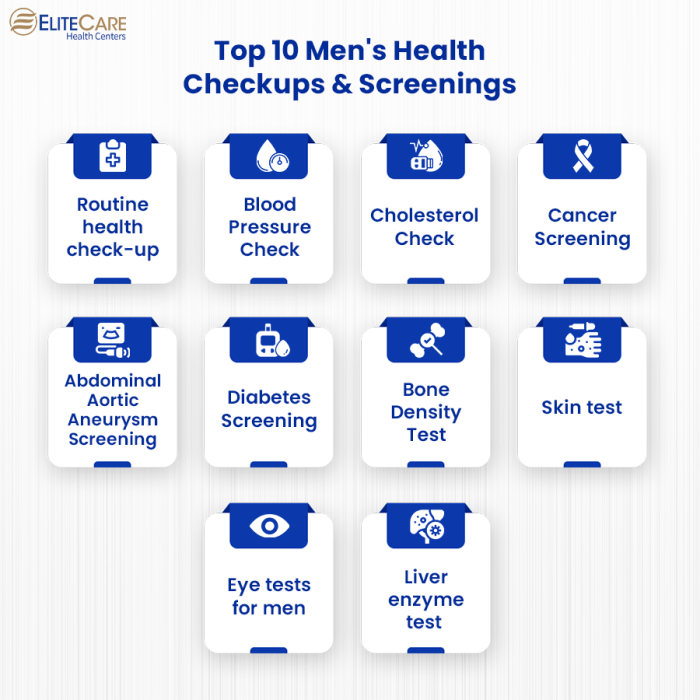
Health policies play a crucial role in shaping men’s access to health screenings and ultimately impacting their health outcomes. Let’s explore the existing policies and potential changes that could improve health screening rates for men.
Existing Health Policies
- Some existing health policies may provide coverage for specific health screenings for men, such as prostate cancer screenings or cholesterol tests.
- However, certain policies might have limitations or barriers that hinder men from accessing regular screenings, such as high out-of-pocket costs or lack of awareness about available services.
- Health policies may also vary by region or healthcare system, leading to disparities in screening rates among different populations of men.
Potential Policy Changes
- Implementing policies that mandate insurance coverage for a comprehensive set of preventive health screenings for men could help increase screening rates.
- Reducing or eliminating out-of-pocket costs for screenings and promoting awareness about available services through policy initiatives could encourage more men to prioritize their health.
- Addressing healthcare provider shortages in underserved areas through policy interventions could ensure men have access to the screenings they need.
Impact of Policy Decisions
- Policy decisions that support men’s access to health screenings can lead to early detection of health conditions, resulting in better health outcomes and reduced healthcare costs in the long run.
- Conversely, policies that create barriers to screenings can contribute to delayed diagnosis, advanced disease stages, and poorer health outcomes for men.
- By analyzing the impact of policy decisions on men’s health outcomes related to screenings, policymakers can make informed choices to improve overall health equity and outcomes for men.
Health Records
Maintaining accurate health records is crucial for men undergoing health screenings to ensure comprehensive and personalized care. These records contain vital information about past screenings, test results, medical history, and risk factors that help healthcare providers make informed decisions regarding screenings and treatments.
Electronic Health Records
Electronic health records (EHRs) have revolutionized the process of tracking men’s health screenings by providing a centralized and accessible platform for storing and sharing health information. EHRs allow healthcare providers to easily retrieve and review a patient’s complete medical history, including previous screenings, medications, and risk factors, leading to more efficient and coordinated care.
- Streamlined tracking of men’s health screenings
- Facilitates communication between healthcare providers
- Reduces the risk of errors and duplications
Personalized Screening Tailoring
Health records play a vital role in helping healthcare providers tailor screenings based on individual risk factors. By analyzing a patient’s health records, providers can identify specific health concerns, genetic predispositions, and lifestyle factors that may require targeted screenings or interventions. This personalized approach ensures that men receive screenings that are most relevant to their health needs, improving early detection and prevention efforts.
- Customized screening recommendations based on risk factors
- Early detection of potential health issues
- Optimized preventive care strategies
Health Screening
Preparing for a Health Screening:Health screenings are essential for early detection of potential health issues. Here is a step-by-step guide on how men can prepare for a health screening:
Types of Health Screenings for Men
- Prostate Specific Antigen (PSA) Test: This test screens for prostate cancer in men.
- Cholesterol Test: Helps in assessing the risk of heart disease.
- Blood Pressure Measurement: Checks for hypertension, a common health concern in men.
- Colonoscopy: Screens for colorectal cancer, recommended for men over 50.
Communication and Action on Health Screening Results
Once the health screenings are completed, the results are communicated to the individual by the healthcare provider. If any abnormalities are detected, the healthcare provider will recommend further tests or treatments to address the issue promptly.
As we conclude this enlightening discourse on men’s health screenings, remember that knowledge is key to fostering a healthier tomorrow. Take charge of your well-being and embrace the proactive approach to safeguarding your health.
Clarifying Questions
What are the most common health screenings recommended for men?
Common screenings include prostate exams, cholesterol tests, blood pressure checks, and colonoscopies.
Are there any financial assistance options available for men seeking health screenings?
Some healthcare facilities offer sliding scale fees or assistance programs based on income levels for men in need of screenings.
How does health insurance coverage impact men’s access to screenings?
Health insurance can determine which screenings are covered and influence where men can receive these services based on network providers.
What role do health policies play in men’s access to health screenings?
Health policies can either support or hinder access to screenings based on regulations, funding, and preventive care priorities.
How can men prepare for a health screening?
Preparation may involve fasting, bringing a list of medications, and being ready to discuss any symptoms or concerns with the healthcare provider.


