
With High-Deductible Health Insurance Plans at the forefront, this paragraph opens a window to an amazing start and intrigue, inviting readers to embark on a storytelling casual formal language style filled with unexpected twists and insights.
High-Deductible Health Insurance Plans offer a unique approach to healthcare coverage, impacting access to services and costs for individuals. Let’s delve into the intricacies of these plans and explore how they shape the healthcare landscape.
Healthcare Access
High-deductible health insurance plans can significantly impact access to healthcare services for individuals. These plans require policyholders to pay a substantial amount out of pocket before insurance coverage kicks in, which can act as a barrier to seeking necessary medical care.
Barriers to Access
- Financial Burden: The high deductibles associated with these plans may deter individuals from seeking medical attention, especially for preventive care or minor health issues.
- Limited Provider Network: Some high-deductible plans have narrow provider networks, making it challenging for policyholders to find a healthcare provider within their insurance network.
- Delayed Care: Due to the financial burden, individuals with high-deductible plans may delay seeking medical treatment, leading to exacerbated health conditions.
Impact in Rural vs Urban Areas
- Rural Areas: In rural areas, where healthcare facilities may already be limited, high-deductible plans can further restrict access to care. The combination of long distances to healthcare providers and high out-of-pocket costs can be particularly challenging for rural residents.
- Urban Areas: While urban areas generally have more healthcare providers, individuals with high-deductible plans in urban settings may still face barriers to access due to the high cost of care. The availability of providers does not always translate to affordability for individuals with these plans.
Healthcare Costs
High-deductible health insurance plans can significantly impact out-of-pocket healthcare costs for individuals. These plans require policyholders to pay a higher deductible before the insurance coverage kicks in, which means individuals are responsible for a larger portion of their healthcare expenses upfront.
Cost-Saving Strategies for High-Deductible Plans
When enrolled in high-deductible health insurance plans, individuals can implement various cost-saving strategies to manage their healthcare expenses:
- Compare prices for medical services and procedures to find the most cost-effective options.
- Utilize telemedicine services for non-emergency medical consultations, which can be more affordable than in-person visits.
- Take advantage of preventive care services covered at no cost under the plan to avoid more significant healthcare expenses in the future.
- Consider generic medications over brand-name drugs to save on prescription costs.
- Shop around for prescription medications to find the best prices at different pharmacies.
- Contribute to a health savings account (HSA) to save pre-tax dollars for qualified medical expenses.
Role of Health Savings Accounts (HSAs)
Health savings accounts (HSAs) play a crucial role in managing healthcare costs under high-deductible plans:
- HSAs allow individuals to save money tax-free for medical expenses, providing a financial cushion for healthcare costs.
- Contributions to HSAs are tax-deductible, reducing individuals’ taxable income and offering additional savings.
- Funds in an HSA can be rolled over from year to year, allowing for long-term savings and future healthcare needs.
- Individuals can use HSA funds to pay for qualified medical expenses, including deductibles, copayments, and certain medical services not covered by insurance.
Healthcare Providers
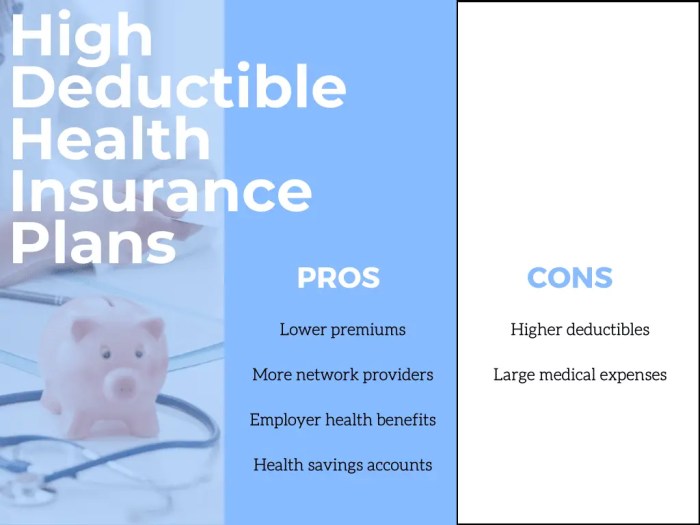
High-deductible health insurance plans can significantly impact the relationships between patients and healthcare providers. These plans require individuals to pay a substantial amount out of pocket before insurance coverage kicks in, leading to patients being more cost-conscious when seeking medical care. This can sometimes strain the patient-provider relationship as patients may delay or avoid necessary medical treatment due to the high costs involved.
Quality of Care
When comparing the quality of care received by individuals with high-deductible plans versus traditional insurance plans, there are some key differences to consider. While high-deductible plans may offer lower monthly premiums, they often come with higher deductibles and out-of-pocket costs. This can result in individuals with these plans forgoing preventative care or necessary treatments due to financial constraints, potentially leading to poorer health outcomes in the long run.
- Individuals with high-deductible plans may experience delays in seeking medical care, which can impact their overall health and well-being.
- Providers may also be more cautious in recommending certain treatments or procedures to patients with high-deductible plans, considering the financial burden it may place on the individual.
- Quality of care can be compromised if individuals with high-deductible plans are unable to afford necessary medications or follow-up appointments.
Choosing Healthcare Providers
In order to effectively choose healthcare providers with high-deductible plans, individuals should consider the following strategies:
- Research in-network providers: Opting for healthcare providers that are within your insurance plan’s network can help reduce out-of-pocket costs significantly.
- Compare costs: Look into the prices charged by different providers for the same services or treatments to ensure you are getting the best value for your money.
- Consider telehealth options: Virtual appointments can often be a more cost-effective alternative to in-person visits, especially for routine check-ups or follow-up consultations.
- Ask about payment plans: Some healthcare providers may offer payment plans or discounts for individuals with high-deductible plans, helping to make healthcare more affordable.
Health Insurance
Health insurance plays a crucial role in covering medical expenses and ensuring access to healthcare services. Understanding the key differences between high-deductible health insurance plans and other types of insurance plans is essential for making informed decisions about healthcare coverage.A high-deductible health insurance plan typically has lower monthly premiums compared to other types of insurance plans, such as traditional or preferred provider organization (PPO) plans.
However, the trade-off is a higher deductible, which is the amount you must pay out of pocket for covered healthcare services before your insurance plan starts to pay.
Deductible in High-Deductible Health Insurance Plans
In high-deductible health insurance plans, the deductible is significantly higher compared to other plans. This means that you are responsible for paying a larger portion of your medical expenses before your insurance coverage kicks in. Deductibles can vary depending on the plan, but they are typically in the range of thousands of dollars.
- The significance of the deductible in high-deductible health insurance plans is that it can impact your out-of-pocket expenses and financial responsibility for healthcare services.
- It is important to budget and plan for the deductible amount, as you will need to pay this before your insurance provider starts covering a portion of your medical costs.
- Understanding your deductible and how it applies to different healthcare services can help you make informed decisions about when to seek medical care and how much you can expect to pay.
Impact on Preventive Services Coverage
High-deductible health insurance plans may impact coverage for preventive services, such as annual check-ups, vaccinations, and screenings. While most insurance plans are required to cover certain preventive services at no cost to the individual under the Affordable Care Act, the deductible in high-deductible plans may still apply to other services.
- Individuals with high-deductible plans may need to pay out of pocket for preventive services until they meet their deductible, which can deter some from seeking necessary preventative care.
- It is important to review your plan’s coverage for preventive services and understand how the deductible may impact your access to these crucial healthcare services.
- Some high-deductible plans offer certain preventive services at no cost even before the deductible is met, so it is essential to familiarize yourself with your plan’s specific benefits.
Health Policies
Government policies play a crucial role in shaping the landscape of high-deductible health insurance plans, impacting individuals, healthcare providers, and overall healthcare accessibility. These policies can influence the design, regulation, and implementation of such plans, ultimately affecting how individuals access and afford healthcare services.
Impact of Policy Changes
Recent policy changes related to high-deductible health insurance plans have had significant implications for individuals. For example, the expansion of Health Savings Accounts (HSAs) and the introduction of tax incentives for individuals enrolled in high-deductible plans have aimed to promote consumer-driven healthcare and cost-sharing. However, these changes have also raised concerns about the affordability of care for low-income individuals and the adequacy of coverage provided by such plans.
- Policy changes promoting high-deductible plans may lead to increased out-of-pocket costs for individuals, especially those with chronic conditions or lower incomes.
- Government initiatives to increase transparency in healthcare pricing and quality information can empower consumers to make informed decisions about their healthcare options.
- Regulatory efforts to standardize plan designs and ensure essential health benefits are covered under high-deductible plans can help protect individuals from inadequate coverage.
It is essential for policymakers to strike a balance between promoting consumer choice and ensuring healthcare affordability and quality for all individuals.
Effectiveness of Current Policies
The effectiveness of current health policies in addressing concerns related to high-deductible plans remains a topic of debate. While some argue that these policies promote cost-consciousness and incentivize individuals to seek value-based care, others raise concerns about the potential barriers to accessing necessary healthcare services.
- Studies have shown that individuals enrolled in high-deductible plans may delay or forgo necessary medical care due to cost concerns, potentially leading to adverse health outcomes.
- Policy interventions, such as value-based insurance design and targeted subsidies for low-income individuals, can help mitigate the negative effects of high deductibles on healthcare access and affordability.
- Collaborative efforts between policymakers, insurers, and healthcare providers are crucial to ensure that high-deductible plans align with the goals of improving health outcomes and reducing healthcare costs.
Health Records
Maintaining accurate health records is crucial, especially when enrolled in a high-deductible health insurance plan. These plans can influence how health records are managed and accessed, impacting the overall healthcare experience of individuals.
Importance of Health Records in High-Deductible Plans
- Accurate health records help individuals track their medical history, treatments, and medications, ensuring continuity of care.
- Having organized health records can facilitate communication with healthcare providers and insurers, leading to better decision-making regarding treatment options.
- Health records play a vital role in managing healthcare costs by avoiding duplicate tests, unnecessary procedures, and ensuring timely interventions.
Technologies for Effective Health Records Management
- Electronic Health Records (EHR): EHR systems allow individuals to store and access their health information securely, providing a comprehensive view of their medical history.
- Health Apps: Mobile applications designed for health record management enable users to input, track, and share their health data conveniently.
- Personal Health Records (PHR): PHR platforms empower individuals to maintain their health records independently, ensuring data accuracy and accessibility.
Health Screening
Routine health screenings and preventive care are essential for maintaining overall health and detecting potential health issues early on. However, individuals with high-deductible health insurance plans may face challenges when it comes to accessing these important services due to the out-of-pocket costs involved.
Impact of High-Deductible Plans on Health Screenings
Health screenings, such as mammograms, colonoscopies, and blood tests, play a crucial role in early disease detection. Under high-deductible plans, individuals may be hesitant to undergo these screenings due to the high costs associated with them. This can result in delayed diagnosis and treatment, leading to more serious health outcomes.
- Individuals may skip preventive screenings to avoid paying high out-of-pocket costs, putting their health at risk.
- High deductibles can act as barriers to accessing routine health screenings, leading to missed opportunities for early intervention.
- Financial concerns under high-deductible plans may deter individuals from prioritizing preventive care, impacting their overall well-being.
Recommendations for Prioritizing Health Screenings
To overcome the challenges posed by high-deductible health insurance plans, individuals can take proactive steps to prioritize their health screenings while managing costs effectively.
- Check with your insurance provider to understand coverage for preventive services and screenings that may be fully or partially covered.
- Utilize free or low-cost screening programs offered by community health centers, clinics, or local health departments.
- Discuss with your healthcare provider the importance of specific screenings based on your age, gender, and family history to prioritize those that are most critical.
- Set aside a healthcare budget to allocate funds for preventive screenings throughout the year, ensuring that your health remains a priority despite financial constraints.
In conclusion, High-Deductible Health Insurance Plans present a complex interplay of cost management and care accessibility. Navigating these plans requires a thoughtful balance between financial considerations and healthcare needs. As individuals weigh their options, understanding the nuances of high-deductible plans is crucial for making informed decisions about their healthcare coverage.
FAQ Guide
How do high-deductible health insurance plans impact preventive care services?
High-deductible plans may require individuals to pay out-of-pocket for preventive services until they meet their deductible. However, some plans cover certain preventive services before the deductible is met.
Can individuals with high-deductible plans negotiate healthcare costs with providers?
Yes, individuals can often negotiate healthcare costs with providers, especially for services not covered by insurance. It’s advisable to discuss payment options and potential discounts upfront.
Are there any restrictions on the types of healthcare providers individuals can visit with high-deductible plans?
While high-deductible plans may have preferred networks, individuals can typically choose any healthcare provider. However, visiting in-network providers may result in lower out-of-pocket costs.
How do health savings accounts (HSAs) work in conjunction with high-deductible health insurance plans?
HSAs allow individuals to save pre-tax money for medical expenses. Contributions to HSAs can help offset out-of-pocket costs associated with high-deductible plans.
Do high-deductible health insurance plans cover emergency care?
High-deductible plans usually cover emergency care, but individuals may still be responsible for meeting their deductible and any coinsurance or copayments for such services.


