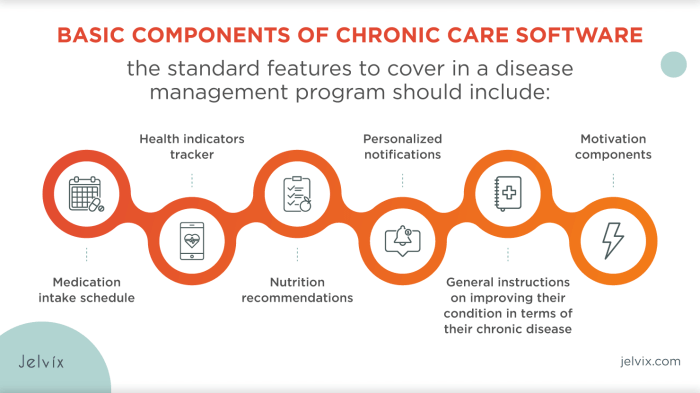
Exploring the realm of Health Records for Chronic Disease Management, this introduction delves into the significance of efficient solutions that lead to improved health outcomes. From managing chronic diseases to enhancing personalized care, this topic offers a comprehensive look at the innovative strategies shaping the healthcare landscape.
Health records play a vital role in revolutionizing the management of chronic conditions by providing valuable insights, fostering collaboration among healthcare providers, and empowering individuals to take control of their health. As we navigate through the intricacies of chronic disease management, let’s uncover the key elements that pave the way for a healthier future.
Importance of Health Records for Chronic Disease Management
Health records play a crucial role in managing chronic diseases by providing healthcare providers with essential information about a patient’s medical history, treatment plans, and progress over time.
Information Stored in Health Records for Chronic Disease Management
- Diagnosis and treatment history: Details about the specific chronic disease diagnosis, medications prescribed, and past treatments.
- Laboratory test results: Information on blood tests, imaging studies, and other diagnostic procedures to monitor the progression of the disease.
- Medication records: A list of current medications, dosage instructions, and any reported side effects or interactions.
- Physician notes: Documentation of appointments, discussions, and recommendations made by healthcare providers during consultations.
Role of Electronic Health Records in Improving Chronic Disease Management
Electronic health records (EHRs) have revolutionized chronic disease management by enhancing accessibility, accuracy, and coordination of care. They allow for:
- Centralized information: All relevant data is stored in one digital platform, enabling quick access for healthcare professionals.
- Real-time updates: EHRs can be updated instantly with new test results, treatment changes, or consultations, ensuring that providers have the most current information.
- Coordination of care: Different healthcare providers can access and contribute to the same record, promoting seamless communication and collaboration in managing chronic diseases.
Healthcare Access for Chronic Disease Management
Accessing healthcare services for managing chronic diseases can be challenging due to various barriers that individuals may face.
Barriers to Healthcare Access for Chronic Disease Management
There are several factors that can hinder access to healthcare services for chronic disease management:
- Lack of health insurance coverage
- Financial constraints
- Geographical barriers, such as living in remote areas
- Lack of transportation to healthcare facilities
- Language barriers and cultural differences
- Stigma associated with certain chronic diseases
Strategies to Improve Access to Healthcare Services
Efforts can be made to enhance access to healthcare services for better management of chronic diseases:
- Expand health insurance coverage and affordable healthcare options
- Provide financial assistance or subsidies for healthcare costs
- Implement telehealth services for remote consultations
- Establish community health centers in underserved areas
- Offer language interpretation services for non-native speakers
- Conduct health education and awareness programs to reduce stigma
Impact of Limited Healthcare Access on Chronic Disease Outcomes
Restricted access to healthcare services can have detrimental effects on the management and outcomes of chronic diseases:
- Delayed diagnosis and treatment leading to disease progression
- Poor medication adherence due to unaffordability
- Lack of regular monitoring and follow-up care
- Increased risk of complications and hospitalizations
- Higher mortality rates among individuals with limited access to healthcare
Healthcare Costs and Chronic Disease Management
Chronic diseases not only take a toll on individuals’ health but also have a significant impact on healthcare costs. The management of chronic diseases requires ongoing medical care, medication, monitoring, and lifestyle adjustments, all of which contribute to the financial burden on both individuals and healthcare systems.
Financial Burden of Chronic Diseases
Chronic diseases often require frequent doctor visits, specialist consultations, laboratory tests, and prescription medications, leading to substantial healthcare expenses for individuals. Additionally, the indirect costs associated with lost productivity and decreased quality of life further exacerbate the financial burden. For healthcare systems, the high prevalence of chronic diseases strains resources and increases overall healthcare spending, affecting the sustainability of healthcare delivery.
- Cost-Effective Interventions for Chronic Disease Management:
Implementing preventive measures such as regular screenings, health education, and lifestyle modifications can help reduce the progression of chronic diseases and lower healthcare costs in the long run. Disease management programs, telehealth services, and remote monitoring technologies offer cost-effective ways to provide continuous care and support to individuals with chronic conditions.
Healthcare Providers and Chronic Disease Management
Healthcare providers play a crucial role in managing chronic diseases by providing necessary medical care, guidance, and support to patients. They work together with patients to develop personalized treatment plans and monitor their progress over time.
Interdisciplinary Approaches for Chronic Disease Management
Interdisciplinary approaches involving various healthcare professionals, such as doctors, nurses, dietitians, and mental health specialists, are essential for comprehensive chronic disease management. Each professional brings a unique skill set to the table, contributing to a holistic approach to patient care.
- Doctors: Diagnose and prescribe medications
- Nurses: Provide ongoing monitoring and support
- Dietitians: Offer nutritional guidance and meal planning
- Mental Health Specialists: Address the psychological impact of chronic illness
Effective Communication Between Healthcare Providers and Patients
Effective communication between healthcare providers and patients is vital for successful chronic disease management. It ensures that patients understand their condition, treatment options, and lifestyle modifications needed for better health outcomes. Open dialogue, active listening, and clear explanations help build trust and collaboration between providers and patients.
Health Insurance Coverage for Chronic Disease Management
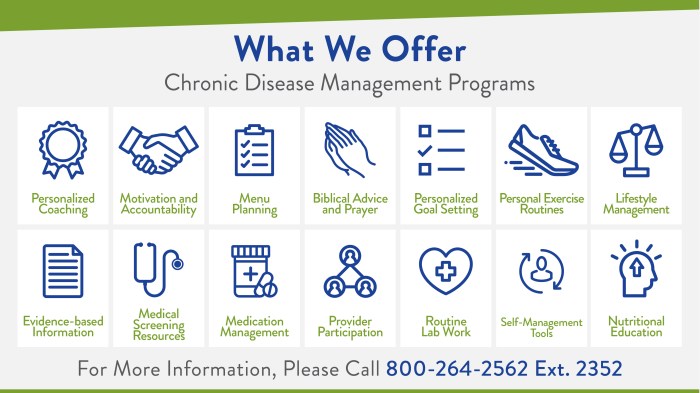
Health insurance coverage plays a crucial role in determining access to chronic disease management services. It can significantly impact an individual’s ability to receive necessary medical care and treatment for chronic conditions.
Impact of Health Insurance Coverage on Access to Chronic Disease Management Services
Having adequate health insurance coverage can ensure that individuals with chronic diseases have access to essential healthcare services such as regular check-ups, specialist consultations, medications, and therapies. Without proper coverage, individuals may face barriers to accessing these vital services, leading to unmanaged chronic conditions and potential health complications.
Comparison of Different Health Insurance Plans in Terms of Coverage for Chronic Diseases
- Some health insurance plans offer comprehensive coverage for chronic diseases, including regular screenings, medications, and management programs.
- Other plans may have limitations or high out-of-pocket costs for chronic disease management services, making it difficult for individuals to afford necessary treatments.
- It is essential for individuals to carefully compare different health insurance plans to ensure they choose one that provides adequate coverage for their specific chronic conditions.
Role of Health Insurance Policies in Promoting Preventive Care for Chronic Diseases
Health insurance policies can play a vital role in promoting preventive care for chronic diseases by covering services such as routine screenings, vaccinations, and lifestyle counseling. By incentivizing preventive measures, insurance policies can help individuals manage their chronic conditions more effectively and reduce the risk of complications.
Health Policies and Chronic Disease Management
Healthcare policies play a crucial role in shaping the management of chronic diseases by establishing guidelines and protocols for prevention, treatment, and care.
Government Support for Chronic Disease Prevention and Management
- Government policies can provide funding for programs that promote healthy lifestyle choices and early detection of chronic diseases.
- Regulations mandating insurance coverage for essential services related to chronic disease management can improve access to care for patients.
- Public health campaigns supported by government policies can raise awareness about the importance of managing chronic conditions and seeking regular medical attention.
Successful Health Policies for Improved Chronic Disease Outcomes
-
Example 1:
The implementation of policies that focus on reducing tobacco use has led to a decrease in smoking-related illnesses such as heart disease and lung cancer.
-
Example 2:
Policies promoting vaccination coverage have significantly reduced the incidence of vaccine-preventable chronic diseases like influenza and hepatitis.
-
Example 3:
Healthcare policies that support the integration of mental health services into primary care have improved outcomes for patients with co-occurring mental health conditions and chronic diseases.
Health Records and Personalized Care for Chronic Disease Management
Health records play a crucial role in providing personalized care for individuals with chronic diseases. By storing comprehensive information about a patient’s medical history, medications, test results, and treatment plans, health records enable healthcare providers to tailor their approach to each individual’s unique needs.
Utilization of Health Records in Tailoring Treatment Plans
Health records are used to create customized treatment plans for chronic disease management. By analyzing the data within the health records, healthcare providers can identify trends, track progress, and make informed decisions about the most effective interventions for each patient. This personalized approach leads to better outcomes and improved quality of life for individuals with chronic diseases.
Utilizing Data from Health Records to Improve Outcomes
Data from health records can be leveraged to enhance outcomes in chronic disease management. By analyzing large datasets from multiple patients, healthcare providers can identify patterns, predict complications, and optimize treatment strategies. This data-driven approach allows for continuous improvement in care delivery and ultimately leads to better health outcomes for individuals with chronic diseases.
Importance of Health Screening in Chronic Disease Management
Regular health screenings play a crucial role in the early detection and management of chronic diseases. By monitoring key health indicators through screenings, healthcare providers can identify potential issues before they escalate, allowing for timely intervention and treatment.
Types of Health Screenings for Chronic Conditions
- Blood Pressure Monitoring: Regular blood pressure checks can help detect hypertension, a common risk factor for heart disease and stroke.
- Blood Glucose Testing: Screening for blood sugar levels is essential in managing diabetes and preventing complications.
- Cholesterol Screening: Monitoring cholesterol levels can aid in preventing heart disease and stroke.
- Cancer Screenings: Regular screenings such as mammograms, colonoscopies, and pap smears are vital in detecting cancer at early stages.
Impact of Health Screening Programs on Chronic Disease Management
Health screening programs have shown significant positive outcomes in chronic disease management. For example, community-based initiatives offering free blood pressure screenings have helped identify individuals at risk for cardiovascular diseases and provided them with necessary interventions. Similarly, organized cancer screening programs have led to higher rates of early cancer detection, resulting in improved treatment outcomes and survival rates for patients.
In conclusion, Health Records for Chronic Disease Management stand at the forefront of modern healthcare, offering a beacon of hope for individuals grappling with long-term health challenges. By leveraging the power of data, technology, and collaboration, we can pave the way for a brighter and healthier tomorrow. As we reflect on the transformative impact of health records, let’s embrace the opportunities they present to enhance the quality of care and empower individuals on their journey towards well-being.
Detailed FAQs
How do health records aid in managing chronic diseases?
Health records provide a comprehensive overview of an individual’s medical history, treatment plans, and test results, enabling healthcare providers to make informed decisions and track progress effectively.
What are some cost-effective interventions for chronic disease management?
Examples include lifestyle modifications, early detection through regular screenings, and adherence to treatment plans, which can significantly impact the management of chronic conditions without incurring high costs.
How do health policies influence chronic disease management?
Health policies drive initiatives for preventive care, funding for research and development of treatments, and support systems that aim to improve access to quality healthcare services for individuals managing chronic diseases.


